

Editor’s update, September 14, 2026: this article was first published on August 29. We have added dated sources and narrowed the usage, integration and accounting claims. The original X source for the Armstrong quotation below remains unverified.
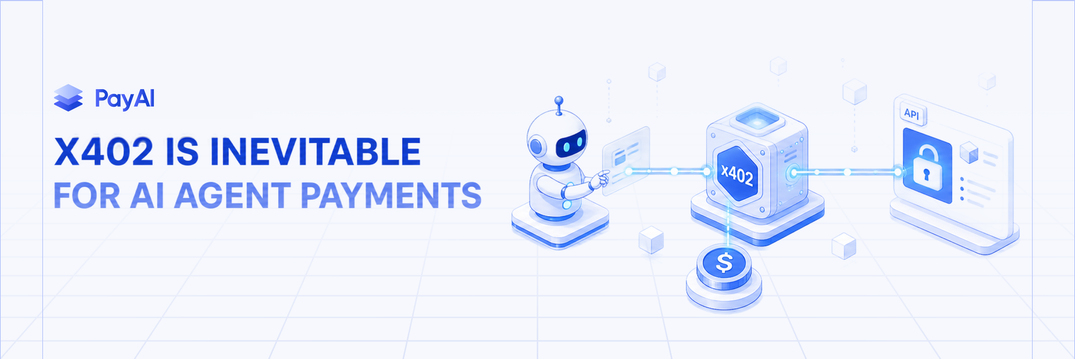
"x402 is inevitable. Every agent is going to need to pay for things. And there will be far more agents than humans."
Coinbase created x402, so its enthusiasm deserves scrutiny. The useful question is what the protocol lets builders do: express payment terms in an HTTP exchange and automate a supported payment flow. That can suit paid APIs and agent tools. It does not make bank accounts or card-based automation impossible, nor does it prove that every agent will use x402.
Coinbase contributed the protocol; it still participates
The Linux Foundation’s July 14, 2026 announcement records the operational launch of the x402 Foundation and Coinbase’s completed protocol contribution. It lists 40 members, including Coinbase, AWS, Google, Cloudflare and the Solana Foundation. Open governance is different from a Coinbase-only product; it does not mean Coinbase stopped building services or participating in the standard.
In its May 7, 2026 AgentCore announcement, Coinbase reported more than 169 million payments, 590,000 buyers and 100,000 sellers during the protocol’s first year. These are Coinbase’s historical figures, not our independently audited count, a current total, or a measure of unique autonomous agents. The announcement does not provide enough methodology to use those counts as proof of sustained paid demand. AWS’s June 15 announcement documents WAF AI traffic monetization for CloudFront-associated web ACLs, with Coinbase’s facilitator providing verification and settlement. It requires configuration; it is not automatic adoption by every CloudFront customer. Cloudflare’s Monetization Gateway announcement offers an early-access waitlist. Google’s AP2 announcement describes an A2A x402 extension developed with Coinbase and others, not exclusive use of x402 for all Google agent payments. These announcements also contradict the earlier suggestion that Coinbase had no involvement.
Multi-network support is not a market-share measurement
Base and Solana both appear in the documented AWS and Coinbase payment integrations above. That establishes support, not their relative share of agent commerce. This update removes the earlier majority-share and “3.3 million USDC in a week” assertions: we have not verified a dated primary dataset with the units, coverage and agent-identification method needed to support them. Payment counts, transferred value, wallet addresses and autonomous agents are different measures.
A multi-network facilitator can verify and settle supported payment flows on more than one network. It does not automatically bridge balances, convert tokens or support every future chain. For PayAI, check the supported networks and assets and authentication requirements. The merchant’s advertised payment terms, client and facilitator must agree on the version, scheme, network and asset.

Why this matters beyond the crypto headlines
Accounting developments need the same care. FASB’s cash-equivalents project considers how certain digital assets may meet the existing definition. The Journal of Accountancy’s August 20 report describes a proposed update with illustrative examples and enhanced disclosures, not a changed definition or blanket permission to classify every stablecoin as cash. The proposal is not an x402 adoption measure or accounting advice for a particular holder.
For builders, the practical takeaway is to evaluate a working integration, not infer inevitability from membership lists or headline totals. If you are building on the protocol, choose the payment options your customers need and test payment, delivery, retries and recovery. Provider announcements establish documented capabilities, not this article’s independent performance or adoption benchmark.
The x402 quickstart explains the integration flow, and the PayAI GitHub organization contains implementation work and examples. Check the chosen release’s supported payment paths and prerequisites. Integration time depends on the application.